



Dramatically Faster DNS Response Times
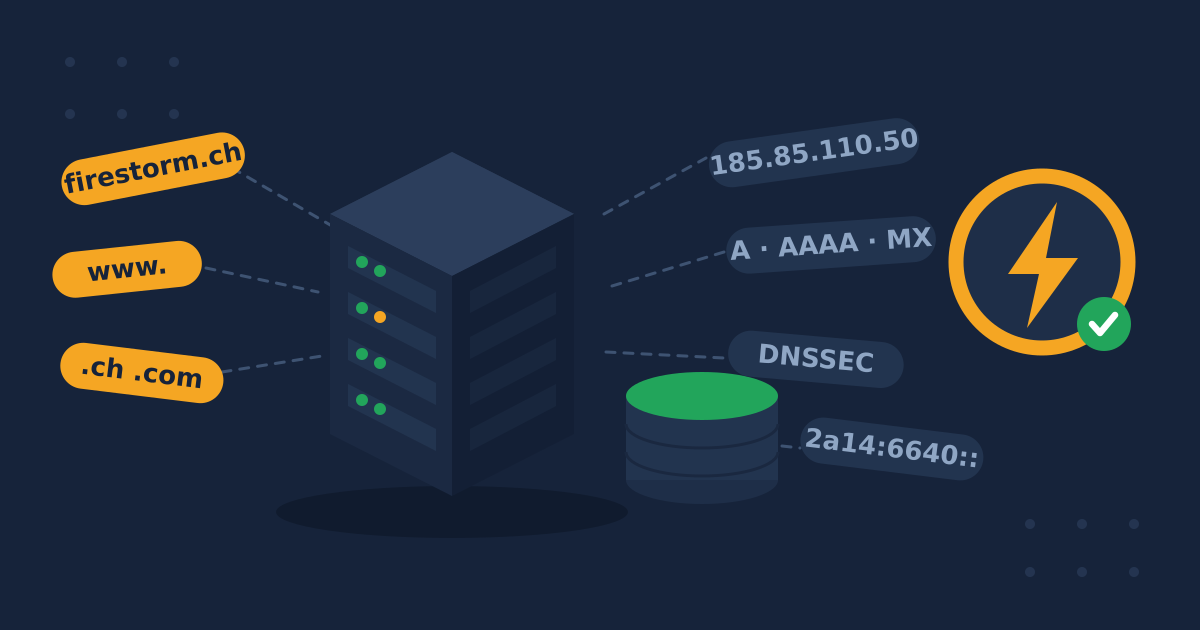
When you open a website, your device first asks our nameservers where to connect. Until now, our servers looked that answer up in a database, repeatedly, for every single query. That lookup is gone: our nameservers now answer straight from memory. The result is dramatically faster response times, and under load they are up to 113 times faster than before.
What changed in numbers
We measured the time our infrastructure contributes to answering a query, before and after, using the same method:
| Everyday use | 3.66 ms | 0.07 ms |
| Under load | 30.2 ms | 0.27 ms |
| New domain live after | minutes | 8 seconds |
In everyday use you will notice little of the raw difference. The trip across the internet takes a few milliseconds more anyway, and no provider can optimise that away. The difference shows where it matters: during peak loads, when a great many queries arrive at once. Previously some of them were left waiting, and for visitors that showed up as the familiar classic: the page does not load, a refresh fixes it, and nobody ever finds the cause.
Nothing for you to change
The migration is complete and ran during normal operation. Your domains, your records and the nameserver addresses all stay the same. There is no deadline, no new configuration and nothing you need to adjust. Every domain we manage remains DNSSEC-signed. That protects your visitors from being redirected by forged answers.
Particularly relevant for resellers
If you manage domains for your own customers, provisioning time is what counts: a newly created domain works almost instantly. The question of why a freshly ordered domain is not reachable yet simply stops coming up.
The same infrastructure powers our DNS server packages: your own nameserver names, a complete API and DNSSEC included.